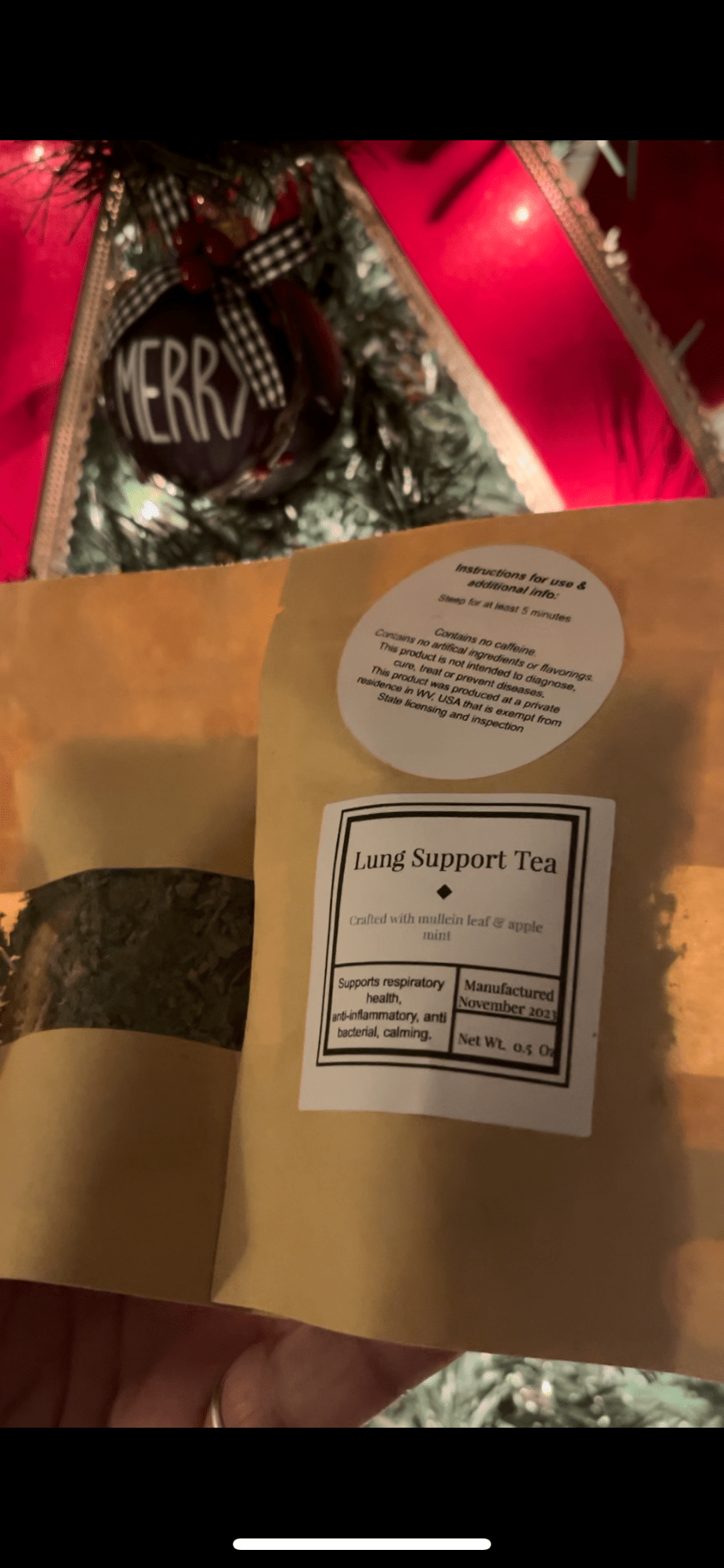
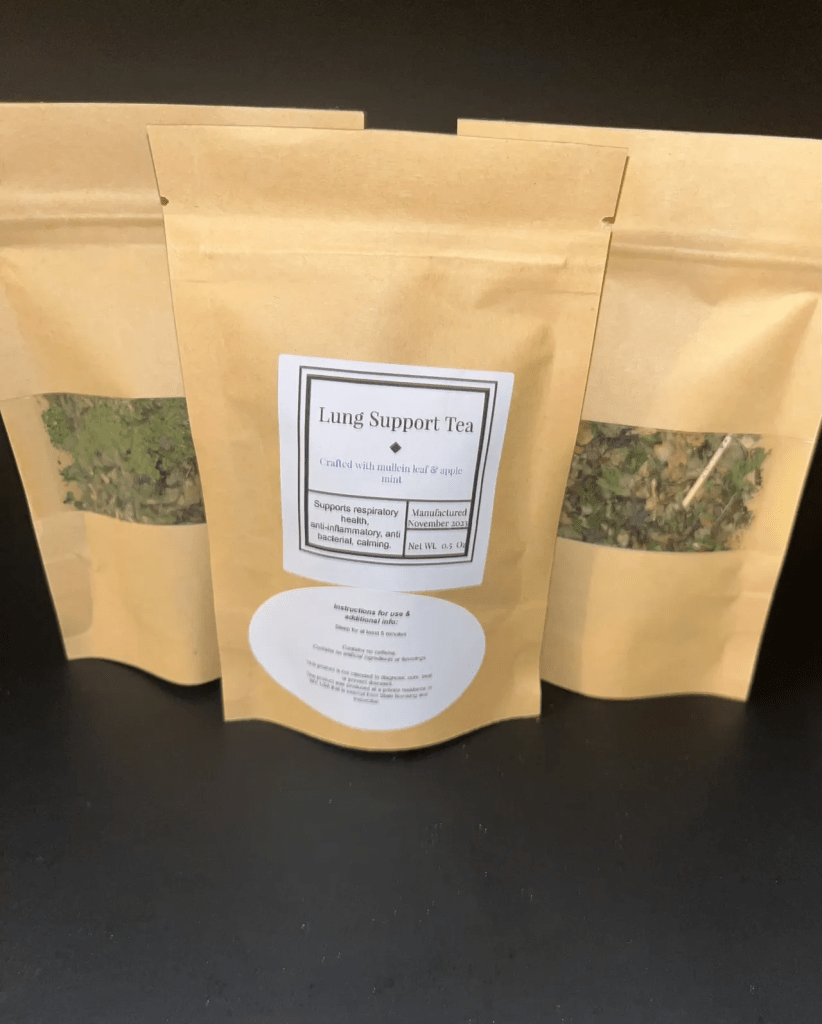
It’s the time of year when the winter weather viruses are coming back in full swing! Two herbs that can help your body and mind through this season are mullein and apple mint. Combining these two herbs into a tea blend was an easy decision due to their powerhouse of benefits.
Herbs Used:
Mullein
Apple Mint
About the herbs:
Mullein
(Verbascum Thapsus)
The medicinal parts of this herb are its aerial parts. It can be found throughout the United States and is mainly in open areas, roadways, pastures, and likes dry sandy soils.
It is best to harvest Mullein leaves in the summer after the plant has reached full bloom.
I spent some time foraging for Mullein in my area after hearing of the luck of others. Unfortunately, I did not find any this year, but I am determined to find it next season. The mullein used in our tea was sourced from a company that practices ethical and sustainable harvesting and promotes remaining free of heavy chemicals in their processing of the herb.
Mullein has many internal and external uses for the body. Internally, it can be prepared in tea form, capsules, tinctures, and infusions. Externally, Mullein can be used in salves, lotions, compresses, and poultices.
As an internal powerhouse, Mullein can be used for respiratory, musculoskeletal, urinary, and immune concerns.
For respiratory concerns, Mullein offers support with soothing the respiratory tract. When it reduces inflammation, it provides beneficial support when dealing with inflammation and works as an expectorant for dry and productive coughs. It can help calm asthma, sore throats, hoarseness, and reduce tightness in the chest.
Musculoskeletal benefits from Mullein are its ability to relieve joint pain and inflammation in the body.
To benefit the urinary system in the body, Mullein can help tone the bladder which makes it useful for those who have recently experienced bladder incontinence through childhood, pregnancy, or menopause.
To boost the immune system, Mullein has effective antimicrobial actions that work against influenza, pneumonia, and strains of Staphylococcus.
Externally, mullein is beneficial for speeding the healing process of wounds. Poultices and salves of Mullein can also help draw out splinters, boils, ease joint and muscle pain, and as a chest rub.
It is considered a fairly safe herb to use both externally and internally.
Apple Mint
(Mentha Suaveolens)
As a member of the mint family, Apple mint shares similar qualities to the more commonly known peppermint, sweet mint, etc. The medicinal part of this plant is its leaves. It can also be found in the United States and is also found in West Virginia. Fortunately, I was able to find an abundance of Apple Mint that was used for our products like bath soaks, salves, and teas.
Apple Mint can be used externally and internally as well. It has been one of my favorite herbs to use due to its strong mint fragrance.
Internally, ingested Apple Mint can boost mood, reduce discomfort from headaches, alleviate digestive concerns, reduce stress, energize the brain, and increase the metabolism in the body.
Externally, it can be used to treat mild acne and reduce inflammation.
This herb is also considered to be generally safe for most, but I always recommend consulting a medical professional before trying any new herbal remedies.
Apple Mint leaves are rich in vitamins and minerals like Vitamin A, C, B, potassium, and iron.
Making the tea:
Materials:
· 1 cup of Dried Mullein Leaf
· 1 cup of Dried Apple Mint (the flowers can also be used, if using flowers, I would suggest ¼ cup of flowers and ¾ cup of Apple Mint)
· Bowl
· Measuring Cup
· Wooden Spoon – to mix
· Storage Container to store mixed tea blend – mason jar, individual tea bags, or any storage container big enough to fit the mixture.
Step 1: Add 1 cup of Mullein to every 1 cup of Apple Mint
Step 2: Mix thoroughly to combine both herbs
Step 3: Store the herbs in the container of your choosing
When drinking tea, add your favorite sweetener and steep the bag for at least 5 minutes before enjoying extracting more of the beneficial components of the herbs.
My favorite sweetener has been two tinctures that I’ve recently crafted: lemon balm and peppermint. They were made using vegetable glycerin which leaves them sweeter and more tolerable than an alcohol-based tincture.
If you make or purchase this tea blend, I hope it provides you with the respiratory and calming support your body is looking for!
 Holistic Bliss WV