

Working as an herbalist means that when you get sick, you become your own clinical patient.
Following a trip into Washington, D.C, visiting several museums, exploring monuments, and visiting the national harbor. I returned home with what started as a sore throat and worked its way up to becoming a nasty bacterial lung infection.
I had body aches, chills, a fever at night, a wet, sticky cough, rattle in my chest, yellow mucus, fatigue, nasal drip (we’re talking tissues in both nostrils at all times and having to be exchanged frequently due to saturation), insomnia, and headaches. I was sick! Having experienced COVID pretty recently and bronchitis years ago, I knew my body was reacting to a bacterial infection that needed mitigation relatively quickly to avoid worsening effects.
It wasn’t until the second day following a rise of the infection, I decided to try a few herbal remedies to give myself some relief.
It was time to put my herbal knowledge to good use!
I wanted to approach this in two ways.
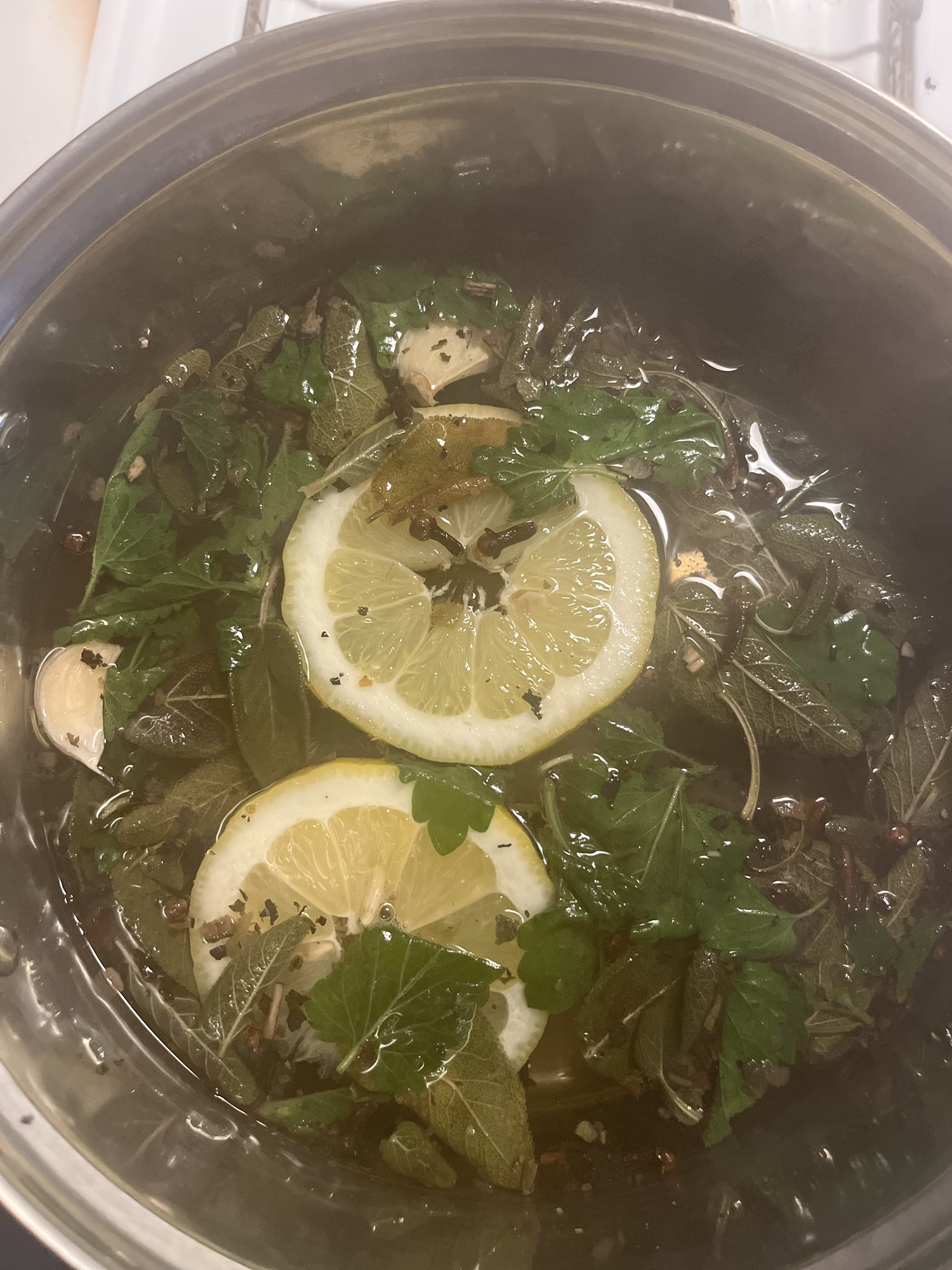
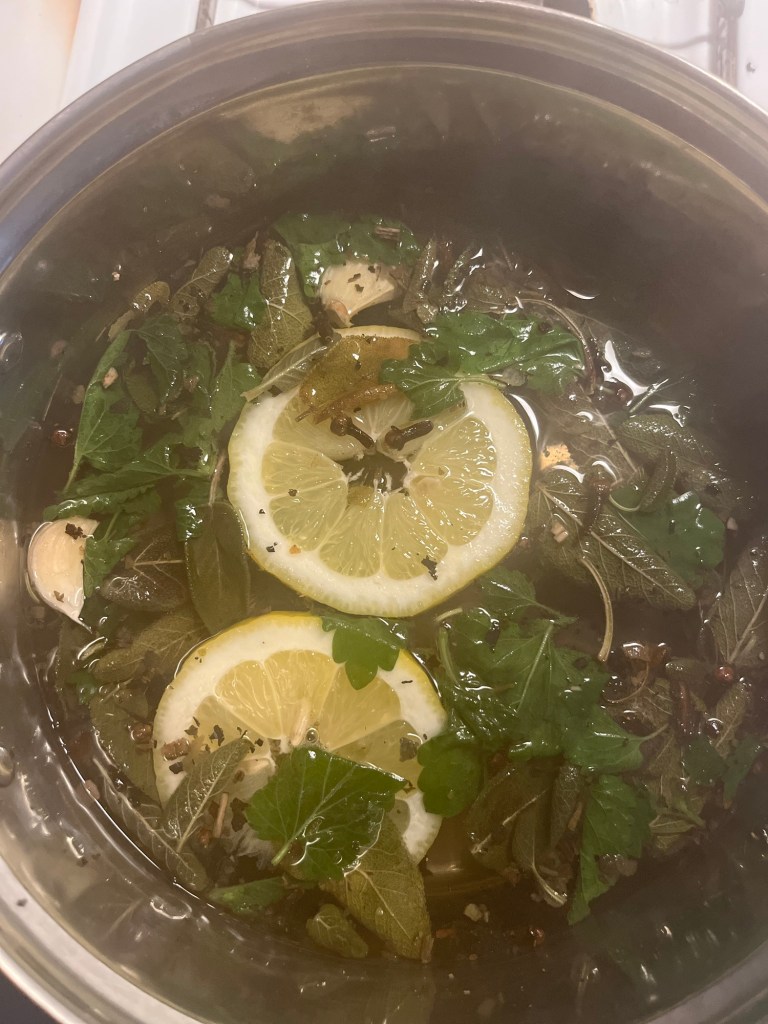
The first being steam inhalation which involves boiling water and carefully inhaling from the pot of water. This opens up airways and soothes inflamed respiratory tracts.
The second would be to allow that same pot of infused herbal water to cool and drink it to find inflammation relief in my throat and chest. (If I’m being honest, after doing the steam inhalation I immediately started drinking the mixture by the spoon full)
Ingredients:
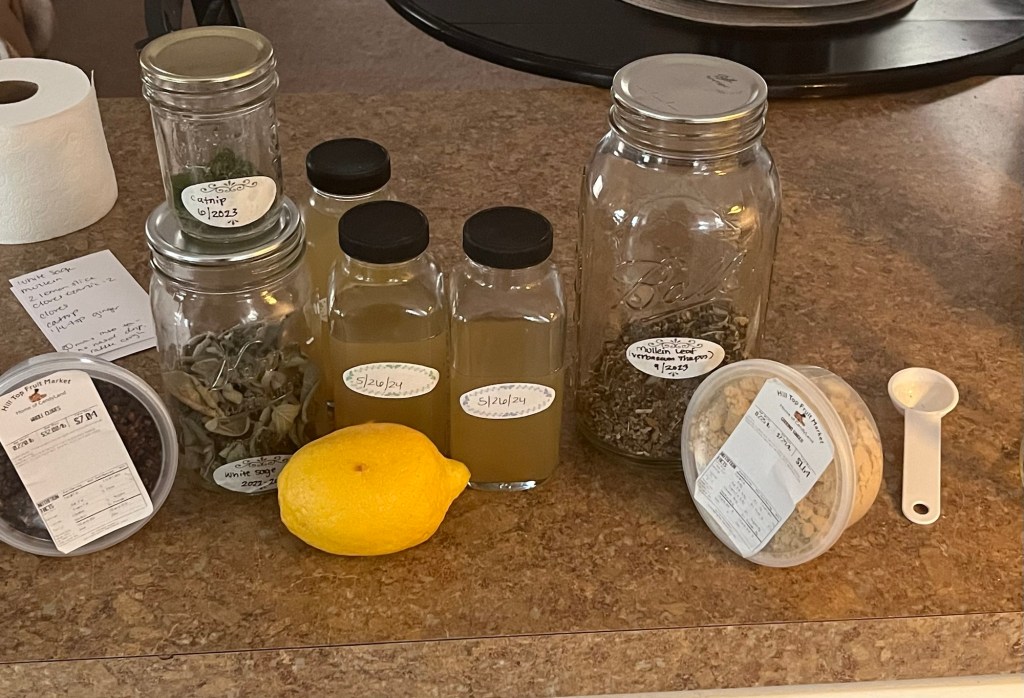
- 2 garlic cloves
- 2 lemon slices
- 3 tbsp dried white sage
- 2 tbsp dried mullein
- ½ tbsp Cloves
- 2 tbsp fresh catnip
- 2/4 tsp ginger powder
Steam Inhalation:
Instructions to make:
- Add 4 cups of water to a pot and bring to boil.
- While water is heating up add in herbs listed above.
- Bring water to roaring boil then reduce and simmer for 10-15 minutes.
- Cut off heat source and move water to countertop.
- Place the pot a safe distance on the counter to avoid spilling it.
- Cover head lightly in a towel and inhale the steam deeply. Do breathing exercises (listed below), cough, being sure to inhale for as long as steam is being produced.
Sit over hot pot for 30 minutes breathing deeply then wait until cool and store as tea or infused water (add honey or other sweetener)
Infused Water:
- Once cooled, add in honey to taste
- Strain
- Store in labeled jars for up to 5 days.
Drink Hot or Cold
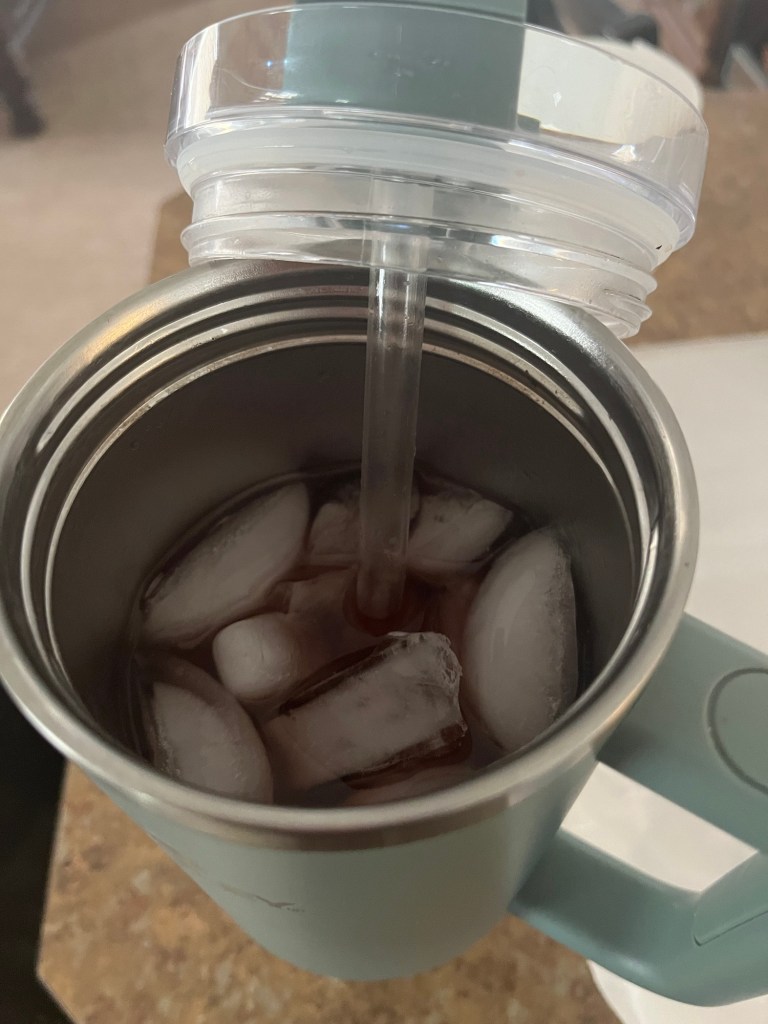
Cold Infusion – added elderberry syrup as an additional immunity boost. To 40 oz cup, added 20 oz of the water mixture, 2 tbsp of elderberry syrup, and filled the remaining cup with water.
Hot infusion – to this I added honey only while the mixture was cooling.
So did it work?
The steam inhalation provided relief almost instantly. I wasn’t able to fully breathe from my nose prior to the inhalation but after, I felt my lungs opening. It was easy to tell that the steam was working to break down mucus and soothe inflammation. It was less than an hour later that I noticed the rattle in my chest that occurred when I would take breaths subsided. As the mixture cooled, I took a few spoon fulls out and drank them which soothed the inflammation in my throat. I noticed rather immediately that the nasal drip had ended which meant no more tissues stuffed up my nostrils. Writing this the following day, I would say 75% of my symptoms have now subsided. I still have some mild congestion but no where near the levels it was the day before. My cough has lingered but it is no longer accompanied by a rattle or pain in my chest when coughing. It’s more dry than wet like it was a few short days ago. My headache is gone, yellow mucus is gone, chills and body ache also gone. It was beautiful to see my herbal remedies work to knock out the symptoms I was experiencing without causing potential harm to my body long term like what can be seen with harsh and unnecessary pharmaceuticals. Great in some cases but not in all, and not in this case.
Herbal Information:
These herbs have more than a respiratory benefit but for the sake of this post, I am going to focus on that side of them
Mullein
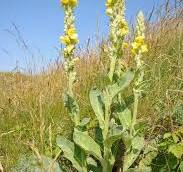
Vebascum Thapsus
Mullein has strong anti-microbial actions and works to fight against many viruses. It is also a strong anti-inflammatory herb working to soothe inflamed respiratory tracts, open the lungs, reduce chest tightness and congestion, and help to expel mucus. It can also be used to strengthen the lungs when paired with other respiratory-aiding herbs. The tiny hairs on mullein can irritate the throat so it is best to strain through a fine mesh strainer before ingesting.
Cloves
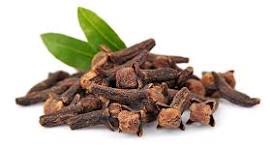
Syzyguium Aromaticum
Cloves were added originally because I love the taste of cloves but their medicinal properties made it a key ingredient in this mixture.
White Sage

Salvia Apiana
A strong antiviral and anti-inflammatory herb, White Sage helps break down fever, relieve cold symptoms, sore throats, bronchial infections, and loosens phlegm. It fights against excess mucus and helps to firm membranes while soothing inflamed membranes.
Ginger

Zingiber Officinale
Fresh ginger would have been preferred in this case but I recently ran out. However, I have a quarter of a pound of ground ginger and this was the perfect time to use it. Ginger is an anti microbial, expectorant, and anti inflammatory herb. It also works to boost immunity and is a great remedy for coughs, sore throats, and chest infections. Avoid ginger if you are on any anticoagulants, in other cases it is generally considered to be safe. In large doses, ginger can cause heartburn.
Lemon
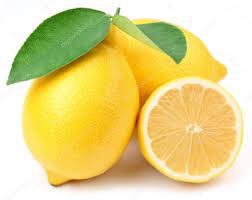
Lemons contain vitamin C which makes it beneficial when trying to fight off infections. It’s vitamin C content also make it beneficial when trying to reduce internal inflammation.
Garlic Cloves

Allium Sativum
Garlic is a powerful antibiotic and can help boost and strengthen the immune system. I was mildly apprehensive on whether or not to add them to this blend knowing I would be drinking it but the taste is so subtle when compared to the powerful benefits. It can help ease chest infections and clear mucus build up.
Catnip
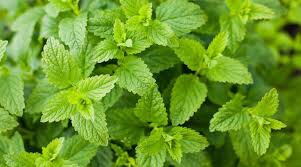
Nepeta Catarina
A last-minute addition, catnip was added to this mixture due to its minty taste and ability to soothe inflamed bronchial tracts. It also works wonders for chest congestion and works to break down mucus in bronchial infections. A word of caution, catnip in large doses can induce vomiting but it is considered generally safe. Avoid if you are pregnant or have kidney or liver diseases.
Breathing Exercises:
- Box breathing – Inhale deeply for a count of 4 with a wide open mouth, hold for another 4 count, exhale with an open mouth for a count of 4 or until all breath is expelled.
- Belly breaths – take a breath deep enough to feel your belly expand
- Humming – fill lungs with air, release with a humming noise or whatever sound feels natural to make.
Thank you for reading! Don’t forget to leave a like and follow us on WordPress & other social media platforms.
 Holistic Bliss WV